
Is the iPhone 12 eSIM compatible? Answer, activation and Dual SIM (2026)
Yes, the iPhone 12 is eSIM compatible. Like the iPhone 12 mini, iPhone 12 Pro and iPhone 12 Pro Max, it carries a physical nano-SIM card and an eSIM, the virtual SIM card etched into the phone. You therefore keep your usual mobile plan for calls and texts, and add a data plan as an eSIM, a travel eSIM for instance, without inserting anything into the device.
In this 2026 rundown, we answer everything the question raises: how to check your model's eSIM compatibility in the settings via the EID number, how to activate the eSIM on iPhone 12 step by step with a QR code, quick transfer from another iPhone or converting your physical SIM, how Dual SIM works with two numbers active at the same time, what the mini, Pro and Pro Max variants change, which other iPhones accept eSIM, and the traveller-relevant spec sheet.
We finish with the exceptions to know by country of purchase (mainland China, Hong Kong, Macao), the model's limit on active eSIMs, and choosing an eSIM plan to travel with an iPhone 12 in 2026.
Is your device eSIM compatible?
Pick your brand, then your model: instant verdict.
Can the iPhone 12 have an eSIM?
Yes. The entire range released in October 2020 handles the eSIM: iPhone 12, iPhone 12 mini, iPhone 12 Pro and iPhone 12 Pro Max. It is the third iPhone generation to do so, after the iPhone XS, XR and the iPhone 11, and it works identically from one model to another.
In practice, your phone contains two slots of a different nature: a physical tray that takes a nano-SIM, and a soldered chip that receives a downloaded eSIM profile. Neither replaces the other, they work together.
To be sure about your exact unit, the check takes thirty seconds: open Settings, then General, then About, and scroll to the bottom. If an EID line shows, your iPhone 12 is fitted with an eSIM. That 32-digit identifier is the chip's ID card, and some providers ask for it at order time.
One nuance matters, and it depends on the country where the device was bought, not the model. Apple specifies that iPhones sold in Hong Kong and Macao can carry two nano-SIM cards in place of the eSIM. An iPhone 12 brought back from those markets, or bought second-hand without knowing its origin, may therefore show no EID line. That is exactly what the Settings test settles, without guessing.
There is an even faster shortcut: dial *#06# in the Phone app. The identifier screen opens immediately and shows the IMEI plus the EID, without navigating the menus.
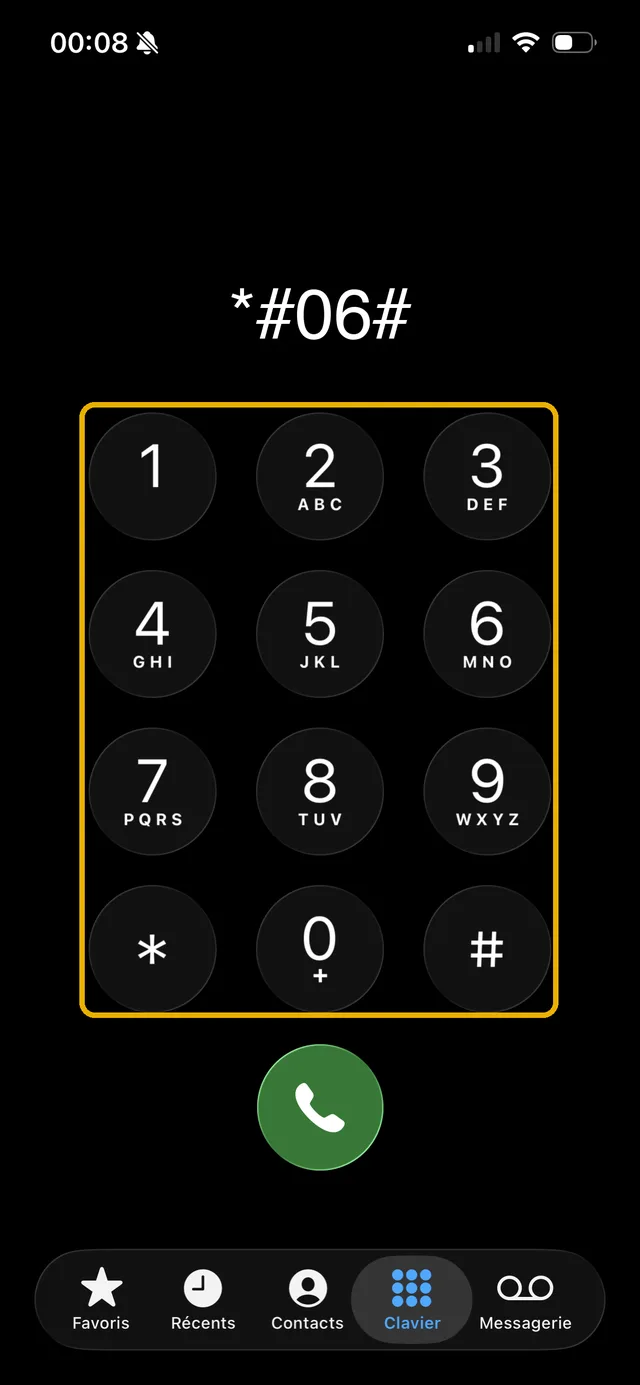
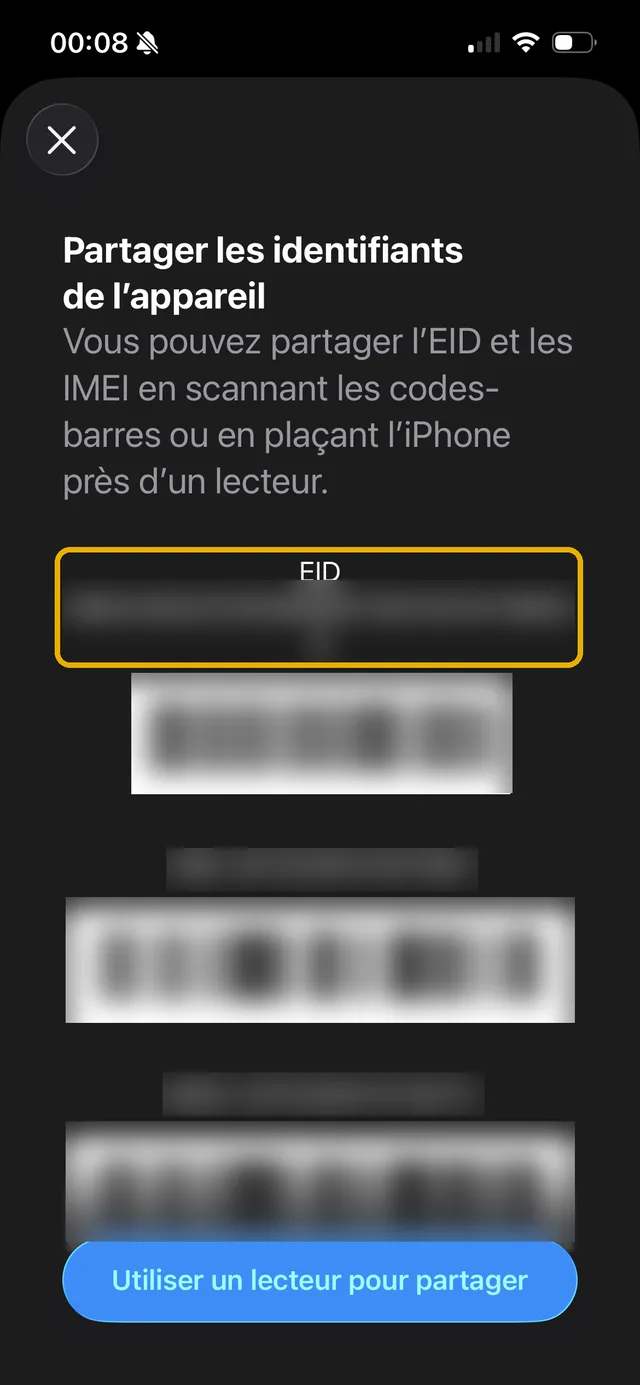
The rat's advice: If you buy a refurbished iPhone 12, ask for a screenshot of the Settings, General, About screen before paying. The EID line visible in the photo is the only proof the unit really handles eSIM, whatever the listing promises.
How do you activate the eSIM on iPhone 12?
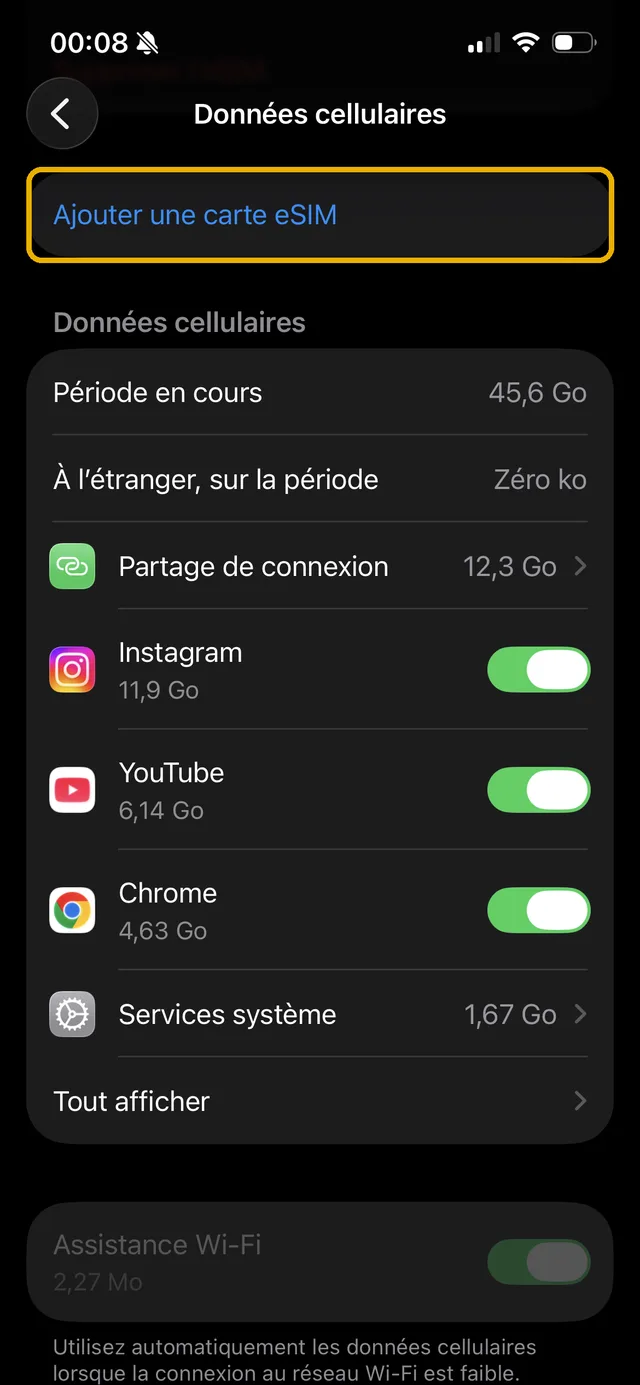
Activating an eSIM on iPhone 12 always goes down the same path: Settings, Mobile Data, then "Activate mobile plan" or "Add eSIM". From there, Apple offers three methods, and your carrier or eSIM provider decides which one you use.
The QR code method is the most widespread among travel eSIM providers. You receive a code by email after purchase, choose "Use QR code" in the menu, and scan it with the camera. The profile downloads, then the iPhone asks you to name the line and pick which one uses mobile data. At no point do you enter any technical setting yourself.
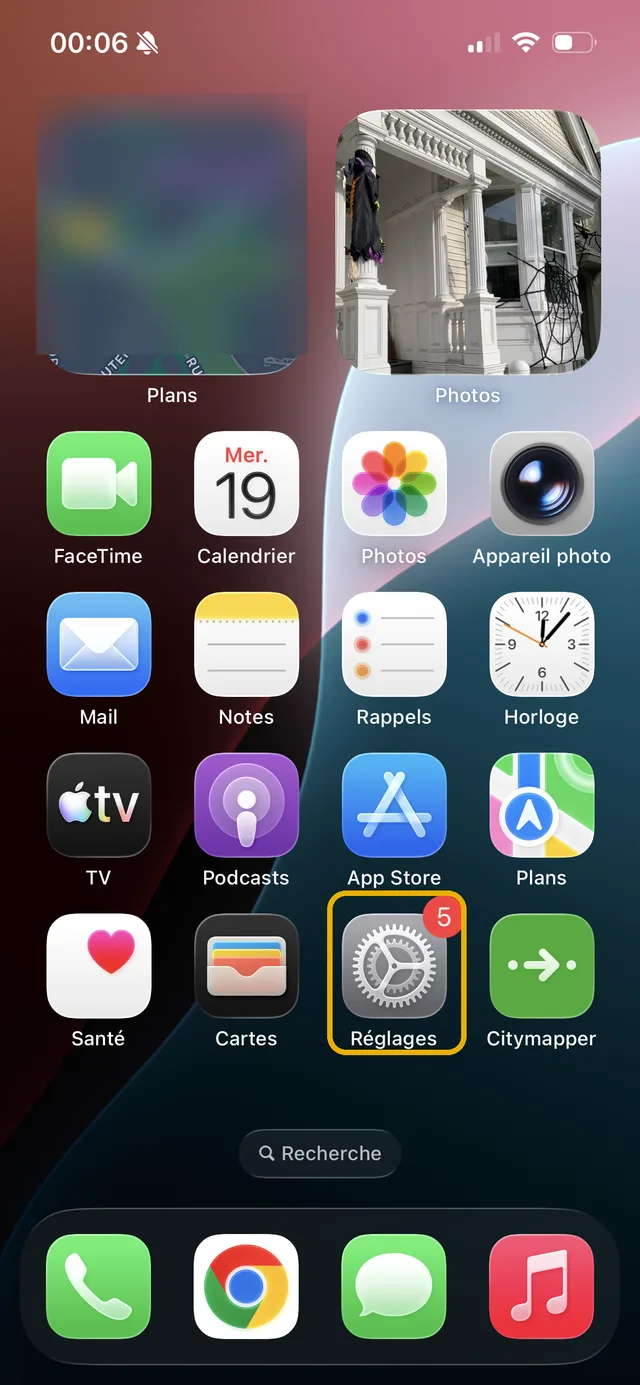
Here is the path, screen by screen. Step 1: open the Settings app from the home screen.
Step 2: tap the Mobile Data row.
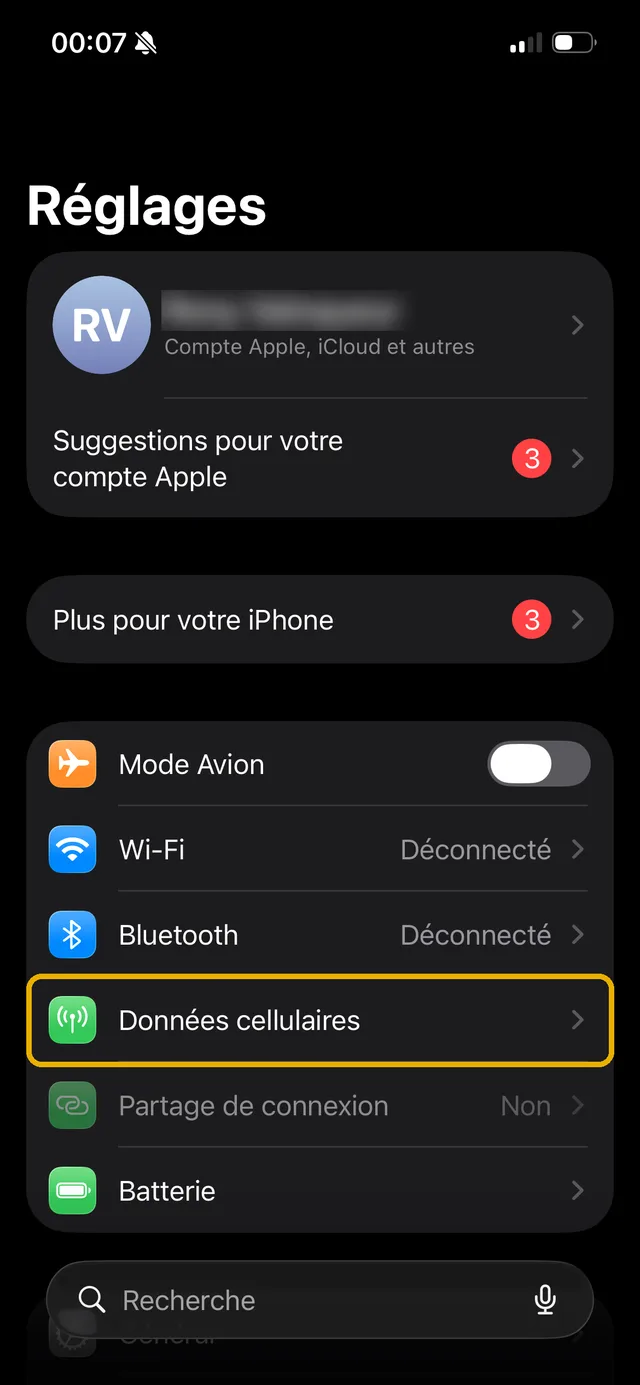
Step 3: choose "Add eSIM", then the method you want, QR code in general.
If you prefer following the operation on video, Apple Support runs through it in under two minutes:
Quick transfer is for when you change phones. By tapping "Transfer from a nearby iPhone", you retrieve a line already active on your old device, without going back through your carrier. Handy when the iPhone 12 becomes your main phone after a second-hand purchase.
Physical SIM conversion, finally, turns your current nano-SIM into an eSIM, provided your carrier supports it. In the same menu, select the number, tap "Convert to eSIM" and follow the instructions detailed by Apple on its eSIM setup page. The tray then frees up for another card.
Two conditions apply to all three methods. You need an active internet connection, Wi-Fi preferably, because the profile downloads from the carrier's servers. And you need an unlocked phone: an iPhone 12 still locked to a carrier will refuse a competitor's profile. The rest takes two minutes.
A word on timing: do the install the day before departure, at home, on Wi-Fi. The profile sits without activating until you select it, and you avoid discovering a QR code that will not scan at the airport, exactly when you have no connection left.
Is the iPhone 12 Dual SIM?
Yes, the iPhone 12 is a Dual SIM phone, combining a physical nano-SIM and an eSIM. Both lines are active at the same time: your usual number keeps receiving calls and messages while a second line handles the data.
That is the archetypal travel scenario. You leave your home SIM in the tray to stay reachable on your number, and you add a local or regional eSIM for mobile internet, at a price that bears no relation to out-of-plan roaming. In the settings, you choose which line serves data, which one sends texts, and you can change at any time.
There is one limit, specific to models before the iPhone 13: the iPhone 12 keeps only one active eSIM at a time. It can memorise several profiles, but only one runs at any moment, alongside the nano-SIM. Active dual eSIM, two virtual profiles simultaneously with no physical card, only arrives with the iPhone 13. The full detail is in our article on how many eSIMs an iPhone can handle.
In practice, this limit only matters if you planned to run two data eSIMs in parallel. For classic use, a personal number plus a data line abroad, the iPhone 12 does exactly the job.
Setting up Dual SIM properly before going abroad
This is the step almost nobody documents, and yet it is the one that decides the size of your bill when you get home. Installing the eSIM is not enough: you still have to tell the iPhone 12 which line is allowed to consume data.
The setup takes three moves, in Settings then Mobile Data. On your home line, the nano-SIM one, cut data abroad: select the line, then disable data roaming. Your number stays reachable for calls and texts, but it will no longer consume a single byte out of plan.
On your travel eSIM, do the opposite: set it as the default data line and leave roaming enabled. That is normal and risk-free, since it is precisely what you bought: a prepaid data plan, whose price is known in advance.
One last detail, often forgotten: disable the "Allow mobile data switching" option. Without that, the iPhone can switch to your home line on its own when the eSIM's network weakens, and that is exactly the scenario that produces a nasty surprise.
The rat's advice: Make these three settings before take-off, not on arrival. Stepping off the plane, your phone latches onto the first available network within seconds, and if it does so with roaming still active on your home line, the damage is already done.
The eSIM will not install on your iPhone 12: the most frequent cases
When installation fails, the message displayed is rarely explicit. In practice, almost every blocker comes down to five causes, and none requires technical skill.
The QR code has already been used. An eSIM profile installs only once. If you have already scanned the code, even on another device, it will no longer work: you must ask your provider for a new code.
The phone is carrier-locked. An iPhone 12 sold with a subsidised plan refuses competitor profiles. Unlocking is requested from the original carrier, free once the commitment has ended.
The connection is too unstable. The profile downloads from the carrier's servers: on weak Wi-Fi or a shared connection, installation fails without explanation. Try again on a stable network.
The device's country of purchase. With no EID line in the settings, there is nothing to be done: the unit has no eSIM chip, the case of models sold in Hong Kong and Macao with two nano-SIM trays.
No data on arrival even though the profile is installed. Nine times out of ten, the eSIM is not set as the default data line, or roaming stayed disabled on that line. Both settings live in Mobile Data, and are fixed in ten seconds.
If the blocker persists, Apple maintains a page dedicated to setup failures, with the error codes and what to do: if you cannot set up an eSIM on your iPhone.
iPhone 12 mini, Pro and Pro Max: compatibility by variant
All four models in the range behave the same way with the eSIM. The size, screen and number of camera sensors change, the connectivity does not.
iPhone 12 mini: eSIM compatible, with the same nano-SIM plus eSIM combination. Its 5.4-inch display and compact size removed no connectivity feature, a question that comes up often and the answer is clear-cut.
iPhone 12 and iPhone 12 Pro: eSIM compatible, 6.1-inch display for both, the Pro adding a telephoto lens and a steel frame.
iPhone 12 Pro Max: eSIM compatible, 6.7-inch display, same Dual SIM behaviour.
In other words, if you hesitate between two second-hand units in the range, eSIM compatibility is not a tiebreaker. The country of purchase is: it is the only variable that can deprive an iPhone 12 of its eSIM chip.
Which iPhones accept the eSIM?
The eSIM arrived at Apple in 2018 with the iPhone XS, XS Max and XR. Since then, every iPhone released supports it: the iPhone 11, the iPhone 12 range covered here, then the iPhone 13, 14, 15, 16 and 17, plus the second and third-generation iPhone SE.
Two lines are worth remembering. The first separates models before the iPhone XS, which have no eSIM at all, from the rest. The second separates the iPhone 12 from the iPhone 13: before, one active eSIM at a time, after, two virtual profiles in parallel.
A more recent development concerns the United States, where the iPhone 14 and later dropped the SIM card tray. An iPhone 12 bought in France keeps its physical tray.
For the detailed list model by model, with release dates and special cases, we maintain a complete inventory in our eSIM compatible iPhone article.
And if your phone is not an iPhone, the eSIM compatibility checker covers the other brands, from Samsung to Google via Xiaomi.
iPhone 12: the traveller-relevant spec sheet
Released in October 2020, the iPhone 12 debuts the A14 Bionic chip and the 6.1-inch Super Retina XDR OLED display, a clear step up from the iPhone 11's LCD panel. The chassis moves to flat edges, with a Ceramic Shield front.
On connectivity, and that is what matters on the move, the iPhone 12 is the first 5G compatible iPhone. It also handles Wi-Fi 6 and VoLTE, voice over 4G, which has become essential in countries gradually switching off their 2G and 3G networks.
The camera relies on a dual 12-megapixel setup, wide and ultra-wide, with night mode on both. MagSafe wireless charging appears with this generation.
Five years after its release, it remains a phone perfectly suited to travel: 5G, eSIM, Dual SIM and a second-hand price that has come well down. Nothing in its spec sheet disqualifies it for connected use abroad.
Which travel eSIM for your iPhone 12?
An eSIM compatible, unlocked iPhone 12 gives you access to every travel eSIM provider on the market: Airalo, Holafly, Saily, Ubigi, Nomad, Yesim, voilà and some twenty others. Each has its positioning, some betting on unlimited data, others on multi-country coverage or price per gigabyte. voilà, for instance, positions itself on value for money, with an eSIM that is easy to install and an easy-to-use app, and human customer support reachable 24/7.
The right choice depends on your destination, your data volume and the length of the stay, never on the provider in itself. That is precisely the trade-off the comparator settles, with hand-checked prices: the page of compared eSIM carriers and providers gives the overview, destination by destination.
In short: the iPhone 12 accepts eSIMs in all its variants, installation takes two minutes with a QR code, Dual SIM works as nano-SIM plus eSIM with one active eSIM at a time, and the only real trap remains the device's country of purchase.
Frequently asked questions
Can the iPhone 12 have an eSIM?
How do you activate the eSIM on iPhone 12?
Is the iPhone 12 Dual SIM?
How many eSIMs can be active on an iPhone 12?
Which iPhones accept the eSIM?
Is the iPhone 12 mini eSIM compatible too?
Why does my iPhone 12 show no EID number?
Will using a travel eSIM cost me roaming on my home number?
How do you delete an eSIM from your iPhone 12 after the trip?
Does installing an eSIM void the iPhone 12's warranty?
How do I know whether my iPhone 12 is carrier-locked?
Do you need an unlocked iPhone 12 to use a travel eSIM?
Most read
 August 18, 202614 min read
Free Mobile country list: the destinations included abroad (2026)
Free 5G+ plan: 35 GB across 117 destinations. Free Max: unlimited in over 140. The full list of included countries, the limits and the plan B.
 Rony
Rony July 28, 20267 min read
Squeezie eSIM: should you use the Saily promo code?
Squeezie sponsors the Saily eSIM with a -15% promo code. We break down the offer, compare price per GB and tell you whether it is really the best deal.
Rony August 28, 202610 min read
Free eSIM: what is actually free, and what is not (2026)
Six eSIMs with real free data, as reported on September 15, 2026, from providers, their terms and conditions, and when paying €0.80 becomes the smarter choice.
Rony August 19, 20269 min read
La Poste Mobile eSIM: not available yet, and here is when that changes (2026)
La Poste Mobile does not offer eSIM yet, only physical SIM cards. Announced launch date, alternatives and compatible phones in 2026.
Rony August 25, 202610 min read
Numero eSIM review: legit or not? What the ratings don't tell you (2026)
Suspended Trustpilot rating, 3.5/5 on the App Store, disputed charges: our full Numero eSIM review, with verified prices and the alternatives.
Rony August 26, 20269 min read
Does WhatsApp use mobile data? How much, and how to stay in control (2026)
WhatsApp eats into your data plan: from 0.01 MB per message to 20 MB per minute of video call. The numbers, the settings that save your plan, the travel case.
Rony